
Quick answer: When comparing an overhead shower vs hand shower, remember that an overhead shower gives you hands-free, even coverage, while a hand shower is easier to direct for rinsing, cleaning and assisted bathing. If your budget and plumbing allow, a combination set gives both options. Before choosing a shower, check the water pressure, pipe outlet, mounting position and the space available in your bathroom.
Shopping for a shower can feel like choosing a finish first and figuring out the plumbing later. That order often causes trouble. A large rain shower may look impressive but feel weak on a low-pressure supply. A hand shower is practical, but its bracket and hose need a comfortable reach. This overhead shower vs hand shower guide compares the everyday differences so you can choose a set that works in your home.
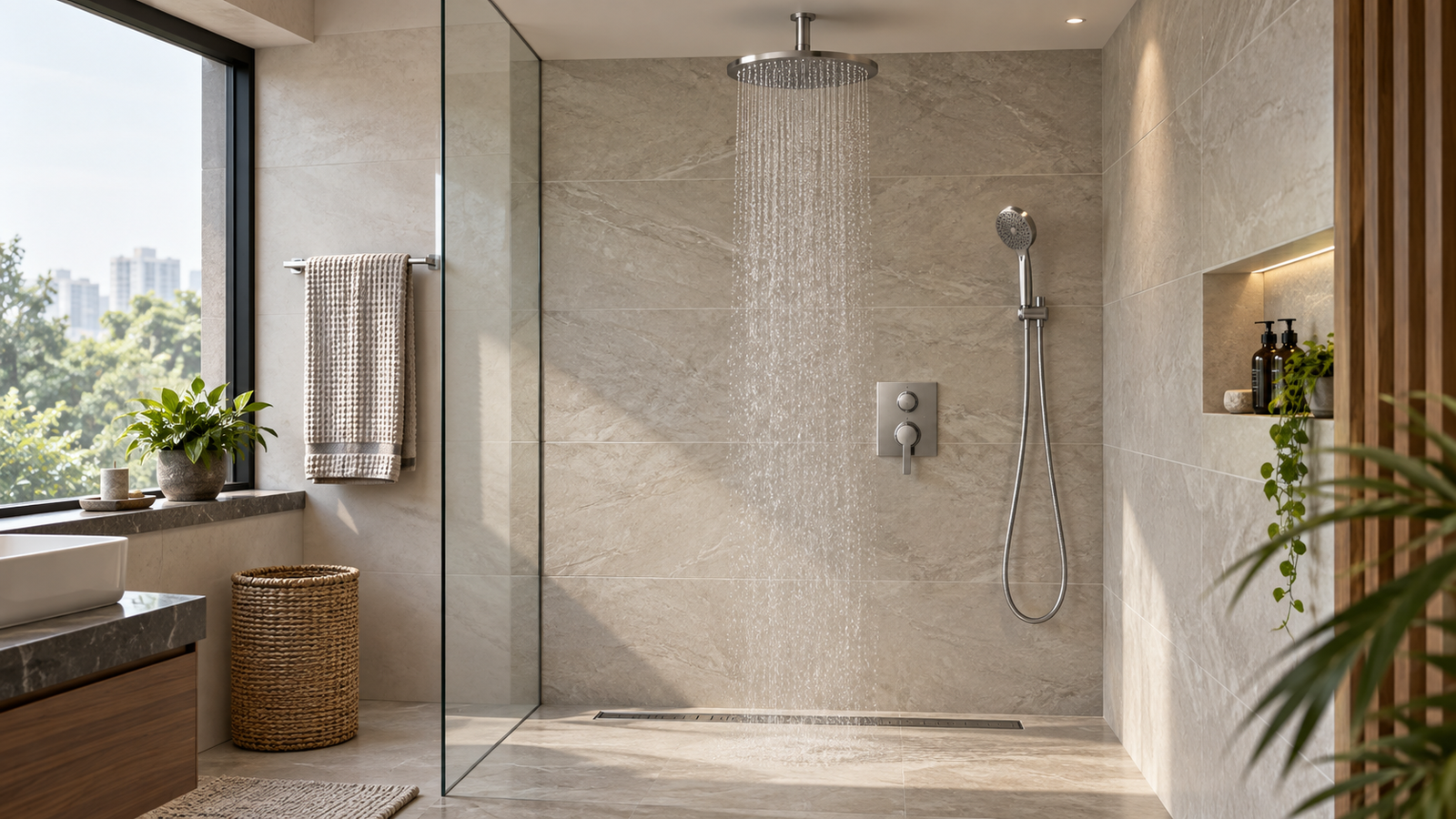
What is the difference between an overhead and hand shower?
An overhead shower is fixed above the user on a wall arm or ceiling connection. It sends water down across the body and leaves both hands free. Some models have one spray pattern; others offer several. A hand shower connects to a flexible hose and sits on a wall holder. You can lift it, aim the spray and return it to the bracket when finished.
These are not mutually exclusive choices. Many bathrooms combine a fixed overhead shower with a hand shower. The combination can make daily bathing more flexible, but it may need a diverter or compatible mixer and extra plumbing points. Decide on the set while planning rough-in work, not after tiles are installed.
Overhead shower: strengths and trade-offs
An overhead shower suits people who like a simple hands-free shower. A broad spray can feel relaxing, and a wall-mounted model is often a straightforward upgrade if the existing outlet is in a suitable position. Ceiling-mounted and large rain-style showers create a different look, but may require changes to the supply line or ceiling access.
The main limitation is that you cannot easily point the water elsewhere. It may be less convenient for rinsing a child, washing a pet or cleaning the shower enclosure. Larger heads can also need more flow to feel comfortable. A water-efficient model may help manage consumption, but perceived performance depends on the home’s supply and the product design. Ask for the manufacturer’s recommended pressure and flow information rather than assuming a larger head will feel stronger.
Hand shower: strengths and trade-offs
A hand shower is versatile because you control where the water goes. It is useful for targeted rinsing, cleaning the shower area and helping a family member who cannot stand comfortably under a fixed spray. The hose and holder can be set at a convenient height for the people who use the bathroom.
There are more parts to keep clean: the hose, bracket and spray face. Check that the hose length reaches comfortably without dragging on the floor and that the holder locks the handset securely. If the set includes multiple spray modes, make sure the controls are easy to operate with wet hands. A hand shower can also be installed as the only shower in a compact bathroom where a fixed head is impractical.
| Feature | Overhead shower | Hand shower |
|---|---|---|
| Water direction | Fixed, hands-free coverage | Adjustable and targeted |
| Daily use | Simple, relaxing shower routine | Rinsing, cleaning and flexible use |
| Space | Needs suitable wall or ceiling position | Needs a holder and hose clearance |
| Maintenance | Clean the face and spray nozzles | Clean the handset, hose and holder |
| Best for | Users who want hands-free bathing | Users who value reach and control |
Should you choose a rain shower?
Rain shower is a style of overhead shower with a wider spray face. The broad coverage can feel pleasant when the water pressure and flow suit the model. A large head is not automatically the best choice for every bathroom. The pipe size, supply pressure, hot-water system, shower height and the user’s preference all affect the experience.
In an apartment with a storage tank at a modest height, a high-flow head may disappoint unless the plumbing system is designed for it. A pressure pump or different shower could be considered, but changes should be checked by a plumber and should follow the building’s rules. A smaller multi-flow head or a hand shower may be more comfortable on a weaker supply. Check the manufacturer’s installation instructions and any minimum pressure listed for the product.
Check these five things before buying
- Water pressure: Ask the plumber to assess the actual supply at the shower point. Do not rely on pressure at another tap.
- Water heater: Confirm that the shower mixer is compatible with your hot- and cold-water arrangement and heater.
- Outlet position: Measure the height and location of existing plumbing. A new ceiling outlet can mean additional concealed work.
- Bathroom size: Check splash direction, shower enclosure, door swing and clearance from nearby fittings.
- Users and maintenance: Consider who uses the shower, how easy the controls are to reach and whether the finish is simple to clean.
For a combination system, check that the diverter is designed for the overhead and hand shower you are pairing. Confirm whether the set includes the mixer, diverter, hose, wall elbow and mounting parts, or whether some components are sold separately. The product drawing is more useful than a photo when you need to confirm compatibility.
Which finish and material should you select?
Chrome is widely used and easy to coordinate with other bathroom fittings. Brushed or coloured finishes can create a coordinated design, but their cleaning instructions may differ. Match the shower finish with the tap and accessories where possible, and ask whether replacement cartridges, hoses or spray plates are available for the model.
Shower heads commonly use metal or engineered plastic components, and the material alone does not tell you how long a product will last. Review the manufacturer’s warranty, service support, available spares and cleaning guidance. For hard-water areas, choose a design with accessible spray nozzles that can be cleaned according to the instructions. Avoid poking metal tools into the outlets because that can damage the finish.
Our bathroom tap buying guide explains how mixer type, valve quality and hard water affect your selection. You can also browse the store’s bathroom and sanitary fittings while planning a coordinated set. For a product-by-product look at spray types and placements, review Jaquar’s shower range and the specifications for the exact model.
Installation mistakes to avoid
- Buying a large overhead head before checking pressure and flow at the outlet.
- Placing a hand shower holder too high or too low for the main users.
- Choosing a ceiling-mounted shower without planning concealed pipe access.
- Mixing a shower head with a diverter or mixer that is not designed for it.
- Assuming the product photo shows every part included in the box.
- Installing before confirming the final tile thickness and finished wall position.
Ask the plumber to test the connections and check for leaks before closing access panels or finishing the wall. Keep the product box, model number and warranty details. A small amount of planning can prevent tile removal if a diverter or outlet sits in the wrong place.
Which shower should you buy?
Choose an overhead shower if you want a simple hands-free spray and your water supply can support the selected model. Choose a hand shower if reach, cleaning or assisted bathing matters most. Choose both if you want a flexible daily setup and can plan the diverter and plumbing before finishing the bathroom. The best shower is the one that suits the actual water supply and users, not just the biggest head on display.
Frequently asked questions
Is an overhead shower better than a hand shower?
Neither is better for every home. Overhead showers are hands-free; hand showers are easier to direct. A combination set offers both functions when the plumbing and budget allow.
Does a rain shower need high water pressure?
Some large rain heads need more flow to feel comfortable. Requirements differ by model, so check the manufacturer’s pressure and flow specifications and have the supply assessed.
Can I add a hand shower to my existing bathroom?
Often yes, but compatibility depends on the existing mixer, outlet and wall arrangement. A plumber can check whether a diverter or additional connection is required.
What is easier to clean, an overhead or hand shower?
Both need periodic cleaning. A hand shower adds a hose and holder, while an overhead head may have a larger spray face. Follow the maker’s instructions, especially in hard-water areas.
Written by the team at Mahakal Hardware and Sanitary, a hardware and sanitary store in Punjab since 2005.