
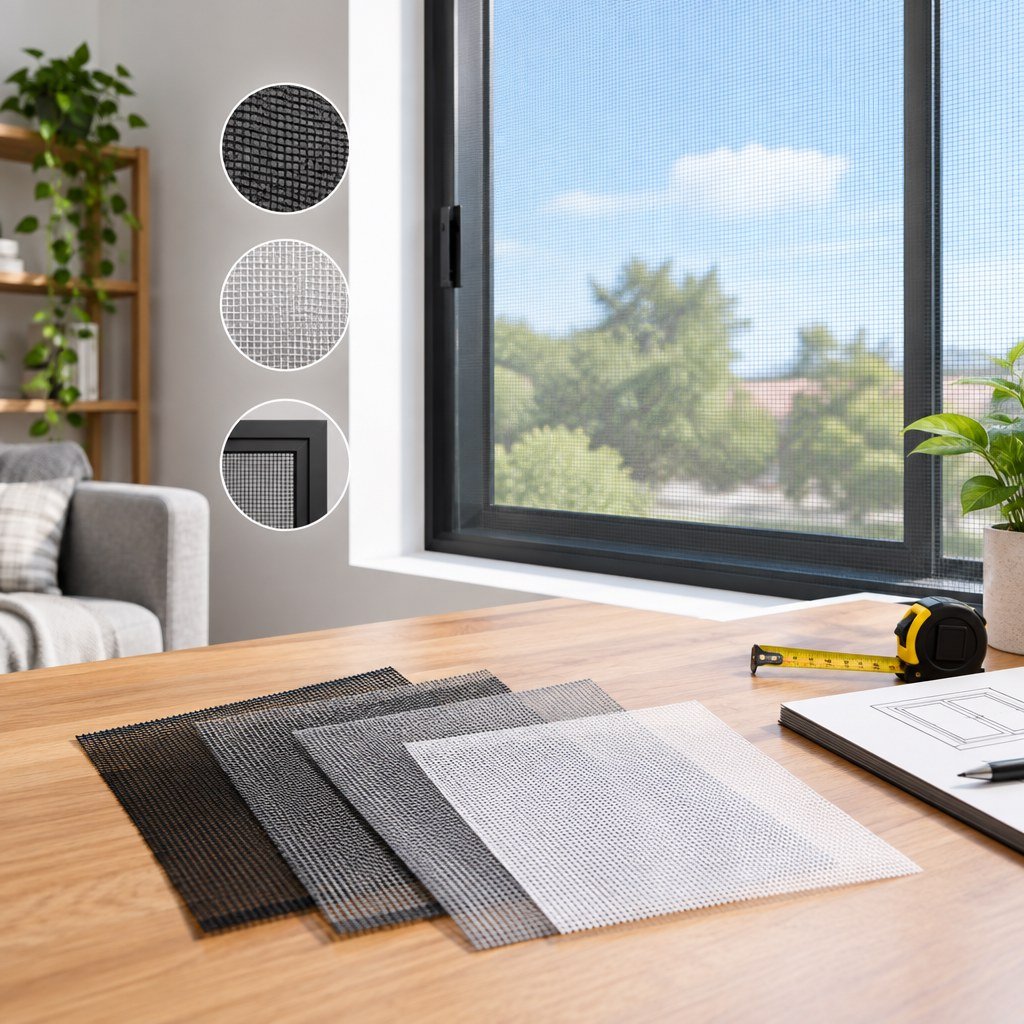
Choosing mosquito mesh for windows involves more than picking a material. The screen must keep insects out while allowing the room to ventilate, and it must fit the window without interfering with its handles or movement. Compare the mesh opening, frame style, cleaning access and the conditions around the opening before ordering.
Quick answer: Fibreglass is flexible and lightweight for many everyday insect screens; aluminium is a firmer metal option; stainless steel is heavier and may suit systems designed for greater resistance to damage. No material is best for every home. Match the mesh opening and frame to the insects, airflow, window type and maintenance needs.
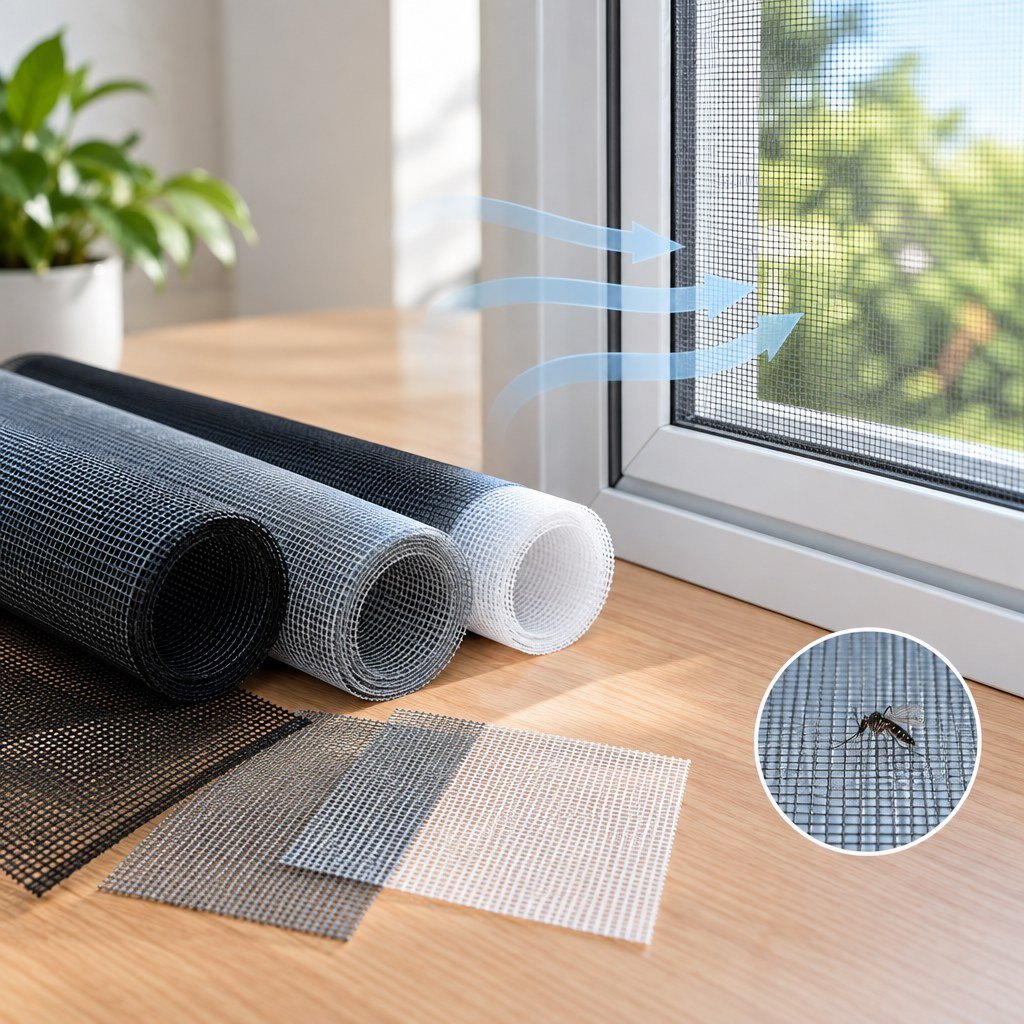
How to choose mosquito mesh for windows
An insect screen covers an opening with a permeable barrier. The weave is intended to limit insect entry while letting air and daylight pass through. The full screen assembly includes the mesh, frame, corners, tracks or fasteners, and the contact between the screen and the window. A small gap at an edge can undermine a dense weave, so fit is as important as the mesh itself.
Start by naming the problem you want to solve. Standard insect mesh is for flying insects. Bird netting spans larger balcony or facade openings and uses a different construction. Security mesh is a purpose-designed assembly with a frame and fixings intended for security applications. Do not use an insect screen as a guard, child-safety barrier or security product.
Compare common mosquito mesh materials
Fibreglass mesh
Fibreglass screen uses woven glass-fibre strands, often with a coating. Its flexibility can make it easier to handle in systems where mesh is pressed into a frame channel. It is a common choice for ordinary window screening, but it can be punctured or stretched by sharp objects and rough handling. Ask the supplier about the coating, available colours, mesh opening and care instructions for the specific product.
Fibreglass can be a useful starting point when the screen will receive little impact and the priority is a light, manageable insect barrier. Compare a sample against the window before choosing a colour.
Aluminium mesh
Aluminium is a metal-screen option with a firmer feel than flexible fabric mesh. It may suit people who prefer a metal surface or an application where the screen will be handled regularly. Metal mesh can crease when bent, so choose a frame and fitting method intended for that product. Coatings, wire size and environmental exposure vary among products; confirm those details instead of assuming every aluminium screen performs the same.
Ask the manufacturer how the mesh should be cleaned and whether it is suitable for the window’s location. In coastal or highly corrosive environments, get product-specific advice about the finish and frame combination.
Stainless steel mesh
Stainless steel mesh is stiffer and heavier than many standard insect-screen materials. Some systems use it where more resistance to tearing or impact is wanted, but the entire frame and fixing arrangement must be designed to carry it. Stainless steel grades differ, and a screen described as stainless is not automatically a tested security screen.
If the aim is to deter forced entry, ask for a system with a stated security purpose and supporting test information. Mesh alone does not determine security; the frame, corners, fasteners, lock and surrounding window also matter.
How mesh opening affects airflow and visibility
Mesh count describes the number of strands or openings over a stated distance. The clear aperture is the open space through each opening. Wire thickness and coating change that clear space, so mesh count by itself does not tell the whole story. Ask for both the mesh count and aperture, and check which insects the maker says the product is designed to exclude.
A smaller opening can help restrict smaller insects, but a tighter weave can also reduce airflow and collect dust more readily. Avoid assuming that the finest mesh is always the best choice. If natural ventilation is important, compare samples in the actual window and ask how the product affects air movement. Product performance depends on the design and installation, so avoid relying on a single generic percentage. The Phifer insect screen selection guide compares screen types and applications; check the exact product data for specifications.
Choose a frame style that suits the window
The screen must work with the window’s movement. A fixed frame can suit an opening that does not need regular access. A sliding screen needs a compatible track and clearance. A hinged screen needs room to swing and a latch that stays accessible. Roller and pleated systems retract when open, but use dedicated hardware and accurate fitting; check that the chosen system suits the window profile.
Think about how you will clean the window, remove the screen and reach any handles. A screen must not block an opening that is needed for emergency escape. In a rental home, ask the owner before drilling or using adhesive fittings. In a new installation, confirm whether the screen frame must be coordinated with the window manufacturer’s profiles.
How to measure and order a screen
Do not measure only once and guess at an allowance. First identify the screen system and its measurement method. Some products are sized to the inside of a recess; others use the finished outside dimension of a custom frame. Taking the wrong reference can leave gaps or make the screen too large to fit.
- Measure the width at the top, middle and bottom of the opening, then record each result.
- Measure the height at the left, centre and right. Check whether the opening is square.
- Note handles, hinges, grills, drain slots, tiles or trim that may obstruct a track or frame.
- Tell the supplier which window type you have and whether the screen will sit inside the recess or on the face.
- Confirm the finished measurement, opening direction and fitting method with the installer before fabrication.
For unusual openings, bowed frames or windows with limited clearance, have an installer measure the finished opening. Accurate sizing matters because insects can enter through a perimeter gap even when the mesh itself is intact.
A practical selection checklist
- Which insects do you need to keep out, and does the maker state that the aperture suits them?
- How much airflow and outward visibility do you want to preserve?
- Will the screen be fixed, sliding, hinged, roller or pleated?
- Can the frame, track and fixing method support the mesh material?
- Will you need to remove the screen to clean the window or access a latch?
- Can replacement mesh, spline or other parts be obtained later?
Check samples and specification sheets instead of choosing only from a colour name or broad label. For larger exterior openings, a guide to bird netting materials and uses can help distinguish that solution from window insect mesh. Mahakal’s hardware product information covers other fitting needs around a renovation.
Cleaning and maintenance
Dust and pollen gradually build up on a screen. Follow the care instructions for the exact mesh and frame. If the screen is designed to be removed, support the frame while taking it down and avoid pulling on one corner. Clean with a soft brush or cloth and mild soapy water only if the product maker permits it. Rinse gently and let the screen dry before reinstalling.
Inspect the corners, spline, tracks, latches and perimeter contact periodically. A small tear can spread, and a loose spline can open a gap. Replace damaged mesh using a compatible material and size; forcing an oversized mesh into a narrow channel may deform the frame. Avoid pressure washing or harsh chemicals unless the maker expressly recommends them.
Frequently asked questions
Which mesh is best for a home window?
Choose according to the window, desired airflow, insect size and likely wear. Fibreglass is flexible; aluminium and stainless steel are metal alternatives. Compare product details and samples rather than treating any one material as universally best.
Does finer mesh stop all insects?
No screen should be described as blocking every insect in every condition. Check the product’s stated aperture and intended use, then ensure the frame is fitted without gaps.
Can I use bird netting on a window?
Bird netting is designed for a different opening and purpose. Its larger openings do not provide the same insect barrier as a close-fitting window screen.
Can mosquito mesh improve home security?
Ordinary insect mesh is not a security barrier. If security is a requirement, choose a complete system designed and tested for that purpose.
Can I install a screen myself?
Simple removable kits may be suitable for a careful DIY installation. Custom frames, retractable systems and awkward openings need accurate measuring; use an experienced installer if you are unsure.
Conclusion
Choose mosquito mesh for windows by matching the material, aperture and frame to the problem you need to solve. Confirm the measurement method, window movement and care instructions before ordering. A correctly fitted, maintainable screen will be more useful than a premium mesh that does not suit the opening.