
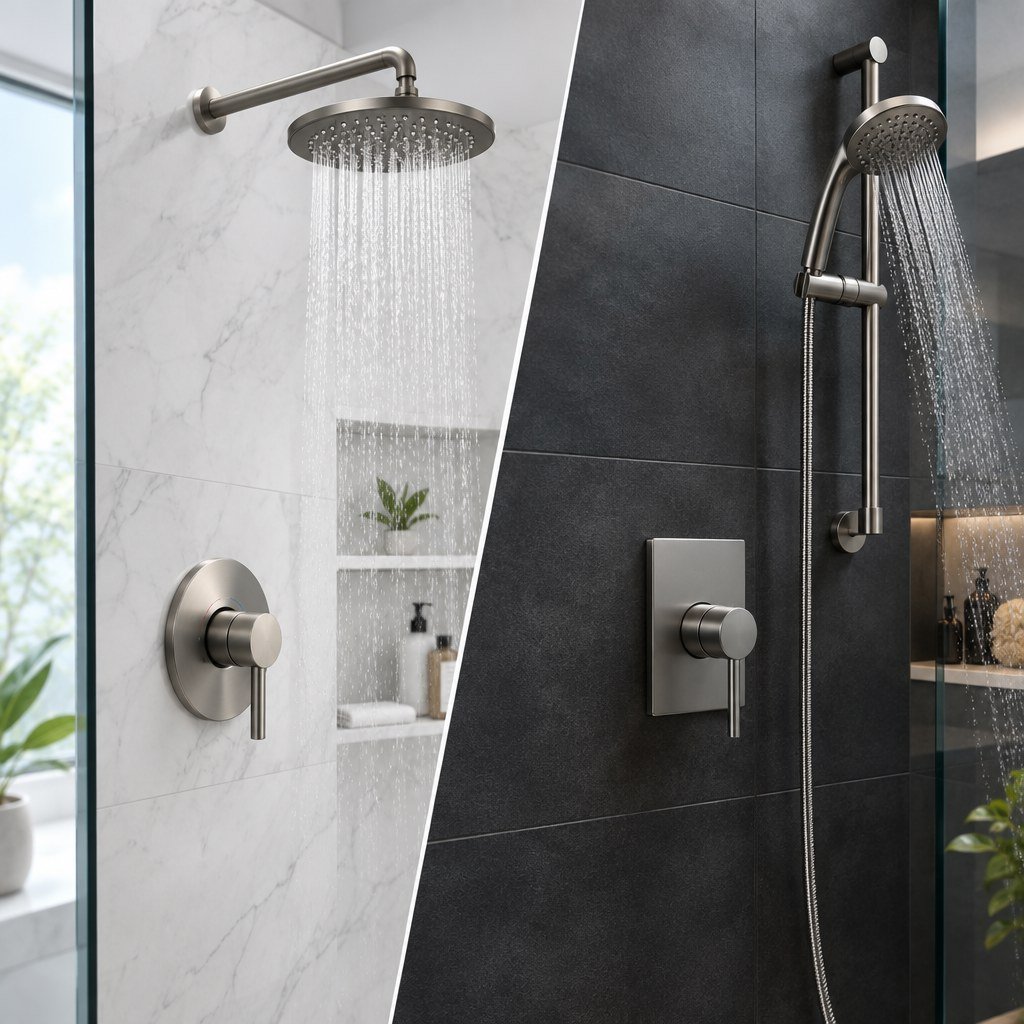
A shower’s temperature can change when water pressure or supply temperature shifts elsewhere in the home. Choosing a thermostatic vs pressure balance shower valve means deciding how the valve should respond to those changes, how you want to control flow and temperature, and what the existing plumbing can support.
Quick answer: A pressure-balance valve responds to changes in hot and cold inlet pressure. A thermostatic valve senses the mixed-water temperature and adjusts the mix to maintain the selected setting within its design limits. Controls and flow functions vary by model, so check the valve specification, installation instructions and local plumbing requirements.

The Role of Shower Mixing and Control Valves
A shower valve mixes hot and cold supplies and controls water sent to the shower outlet. In a concealed installation, the rough-in body sits behind the finished wall; the trim is the visible handle or plate. Rough-in and trim must be designed to work together. These valves are separate from the showerhead itself, so choosing an overhead or hand shower is a related but different decision.
A diverter may direct already mixed water to one outlet or another. It does a different job from a temperature-control valve, though the controls can be combined in some systems. Check the plumbing diagram to understand which component controls temperature, flow and outlet selection.
Deep Dive: What is a Pressure Balance Shower Valve?
A pressure-balance valve responds to a difference in the pressure of the hot and cold inlets. If pressure on one side changes, its balancing mechanism adjusts the flow to reduce the resulting temperature swing. For example, a cold-water draw elsewhere in the home can affect the shower supply; the valve is designed to react to that pressure change.
The response can reduce the volume of water while the valve balances the supplies. The control arrangement varies by model. Some valves use one handle for temperature and flow, while other systems may provide additional controls. Do not assume that a single-handle design or a particular flow behaviour applies to every valve.
A pressure-balance valve does not increase supply pressure or correct undersized pipes, a weak pump or a water-heater problem. If flow is low, a plumber should diagnose the cause rather than replacing the valve based on guesswork.
Deep Dive: What is a Thermostatic Shower Valve?
A thermostatic valve senses the temperature of the mixed water and adjusts the hot-cold balance to maintain the selected temperature within the product’s operating range. Its response, adjustment range and safety features depend on the valve design and installation. Read the maker’s specification rather than assuming a valve will hold an exact temperature under every supply condition.
Many thermostatic systems separate temperature selection from the control of flow, but the layout differs across products. Some also connect to a diverter that selects between outlets. Confirm which controls are included, how they operate and whether the system can supply the intended shower configuration.
Scale, debris or a poorly maintained cartridge may affect valve performance. Follow the manufacturer maintenance instructions and use compatible replacement parts. A thermostatic control is not a substitute for correctly set water-heater controls, safe installation or required code-compliant protection.
Thermostatic vs Pressure Balance Shower Valve: Head-to-Head Comparison
Both valve types mix hot and cold water, but they respond to different conditions. Compare the job each is designed to do rather than treating either label as a guarantee of comfort or safety.
| Decision point | Pressure balance | Thermostatic |
|---|---|---|
| What it senses | Changes in hot and cold inlet pressure | Temperature of the mixed water |
| Typical use | Temperature stability when inlet pressure shifts | More direct temperature selection; many systems separate flow control |
| What can vary | Handle layout, balancing response and outlet flow | Temperature range, flow controls and outlet compatibility |
| Before buying | Confirm rough-in body, supply conditions and local rules | Confirm controls, service access, flow needs and local rules |
The manufacturer Symmons provides a useful explanation of pressure-balancing and thermostatic shower valves. Use it as a general introduction, then rely on the specification and instructions for the exact product you are considering.
Critical Considerations for Your Bathroom Project
Before choosing, ask your plumber to confirm the supply arrangement, outlet count and rough-in space. Multiple shower outlets require a valve and diverter specifically designed for the expected flow and configuration; a thermostatic label alone does not confirm that a system can run every outlet at once.
Check rough-in and trim compatibility
Do not assume trim is universal. Confirm the manufacturer and model series for the valve body already in the wall, the trim plate and cartridge. If the wall is open during renovation, record the product details for future service. For a wider fixture-planning overview, see how to choose bathroom taps.
Plan for access and maintenance
Some repairs can be made through the trim opening; others may require access behind the wall. Ask where shutoff points and service panels will be. If hard water or sediment is an issue, discuss maintenance and filtration with a plumber, and follow the manufacturer’s care guidance.
Local plumbing codes and water-heater arrangements can affect suitable products. Have a qualified professional verify the valve, pipe size, temperature settings and installation before walls are closed. Mahakal’s plumbing service information describes local plumbing support.
Step-by-Step Choice Guide
- List the shower outlets you plan to use and whether they operate together or separately.
- Ask a plumber to identify your existing rough-in body and hot-cold supply conditions.
- Compare the actual control layout, temperature range and service requirements for compatible models.
- Confirm local requirements and manufacturer installation instructions before selecting trim.
- Test the installed controls with the plumber and keep the model information for maintenance.
When comparing shower outlets, remember that the head itself is a separate choice; this guide to overhead and hand showers covers that decision.
Frequently Asked Questions (FAQ)
Does a pressure-balance valve keep the temperature constant?
It is designed to respond to changes in hot and cold inlet pressure and reduce temperature swings. Actual performance depends on the valve and plumbing conditions.
Does a thermostatic valve increase water pressure?
No. A mixing valve controls water temperature and flow through its design; it cannot increase the incoming supply pressure.
Can I use new trim with the valve already in my wall?
Only if the manufacturer identifies the trim as compatible with that exact rough-in body or series. Confirm the model before ordering.
Are thermostatic valves always safer?
They can provide direct temperature control, but no valve makes an installation safe by itself. Correct setup, maintenance, water-heater settings and local requirements still matter.
Can one valve operate a rain shower and hand shower together?
Some systems support multiple outlets and some do not. Check the valve’s rated configuration and flow requirements with a qualified plumber.
Conclusion and Next Steps
Choose between these valve types by considering how each responds to supply changes, the controls you prefer, the outlets you plan to use and the rough-in already installed. Have a qualified plumber verify compatibility, local requirements and service access before the wall is closed. Use the exact manufacturer’s instructions for the selected model. Before finalizing, confirm which control changes temperature, which adjusts flow and how to isolate the supply for service. Keep the model and installation records accessible for future maintenance. Ask the plumber to demonstrate normal start-up and shutoff after installation, and to explain when the cartridge needs cleaning or replacement.
Before finalizing, confirm which control changes temperature, which adjusts flow and how to isolate the supply for service. Keep the model and installation records accessible for future maintenance. Ask the plumber to demonstrate normal start-up and shutoff after installation, and to explain when the cartridge needs cleaning or replacement.